Tamping compresses the ground coffee into an even bed so water flows through it evenly. Get it wrong and water finds the weak spots, rushing through some coffee and missing the rest. That is channelling, and it makes shots taste sour and bitter at the same time.
Distribute before you tamp
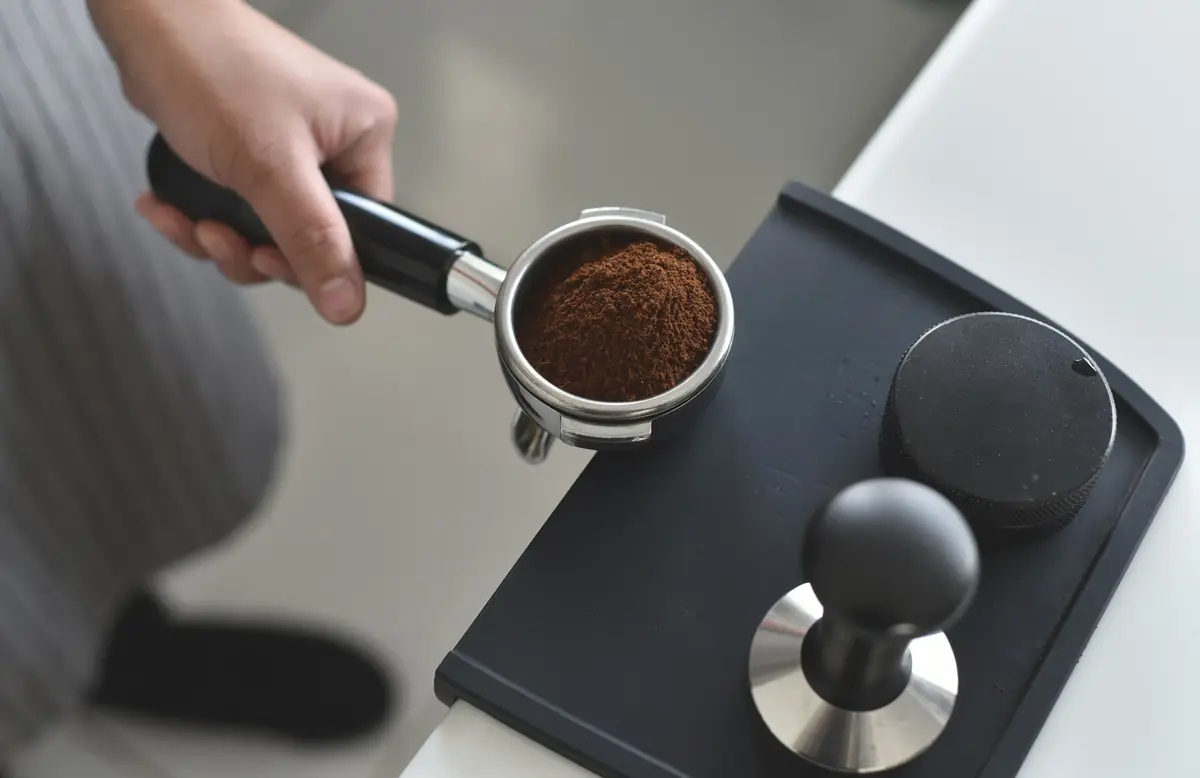
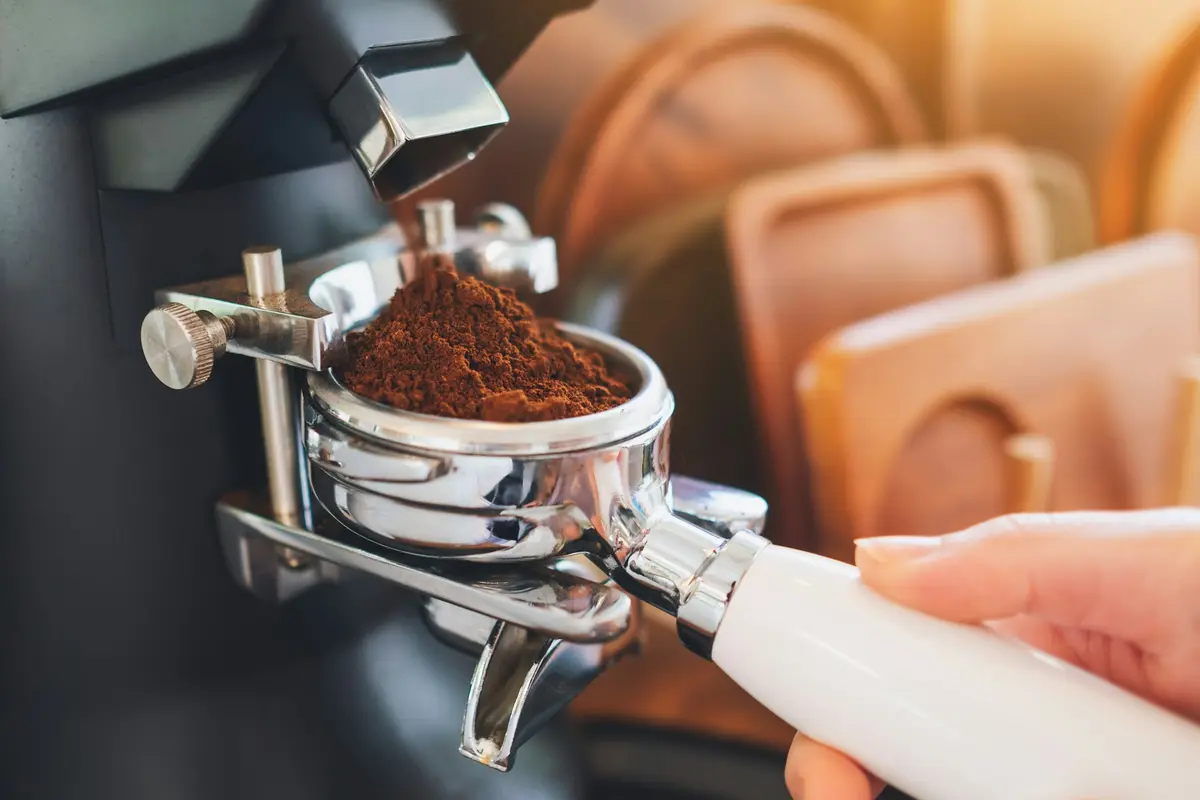
Most uneven shots start before the tamp. Break up clumps and spread the coffee evenly across the basket, ideally by stirring with a WDT tool, then tap the portafilter gently to settle it.
The tamp
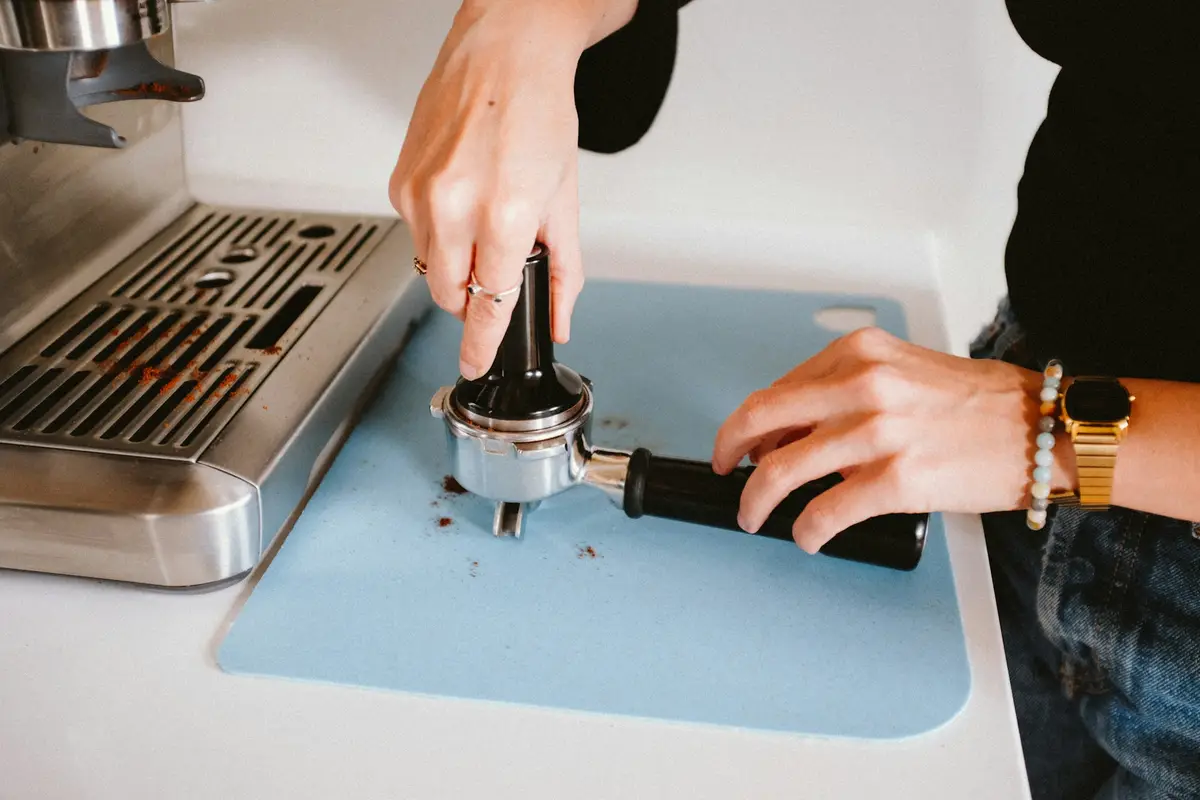
- Rest the portafilter on a flat, stable surface or tamping mat.
- Hold the tamper like a door handle, with your wrist straight above it.
- Press straight down until the coffee stops compressing. Keep the tamper level.
- Do not twist hard or tap the side of the portafilter after tamping; both can crack the puck.
- Wipe loose grounds off the rim before locking in.
How hard should you tamp?
Harder is not better. Once the coffee is fully compressed, extra force changes very little. Consistency and a level surface matter far more than the exact pressure. A spring-loaded tamper takes the guesswork out of both.
Signs of a bad tamp
- Spurts or jets of coffee from the bottom of the basket.
- A wet, sloppy puck with holes in it after brewing.
- Shots that run fast one day and slow the next with the same grind.
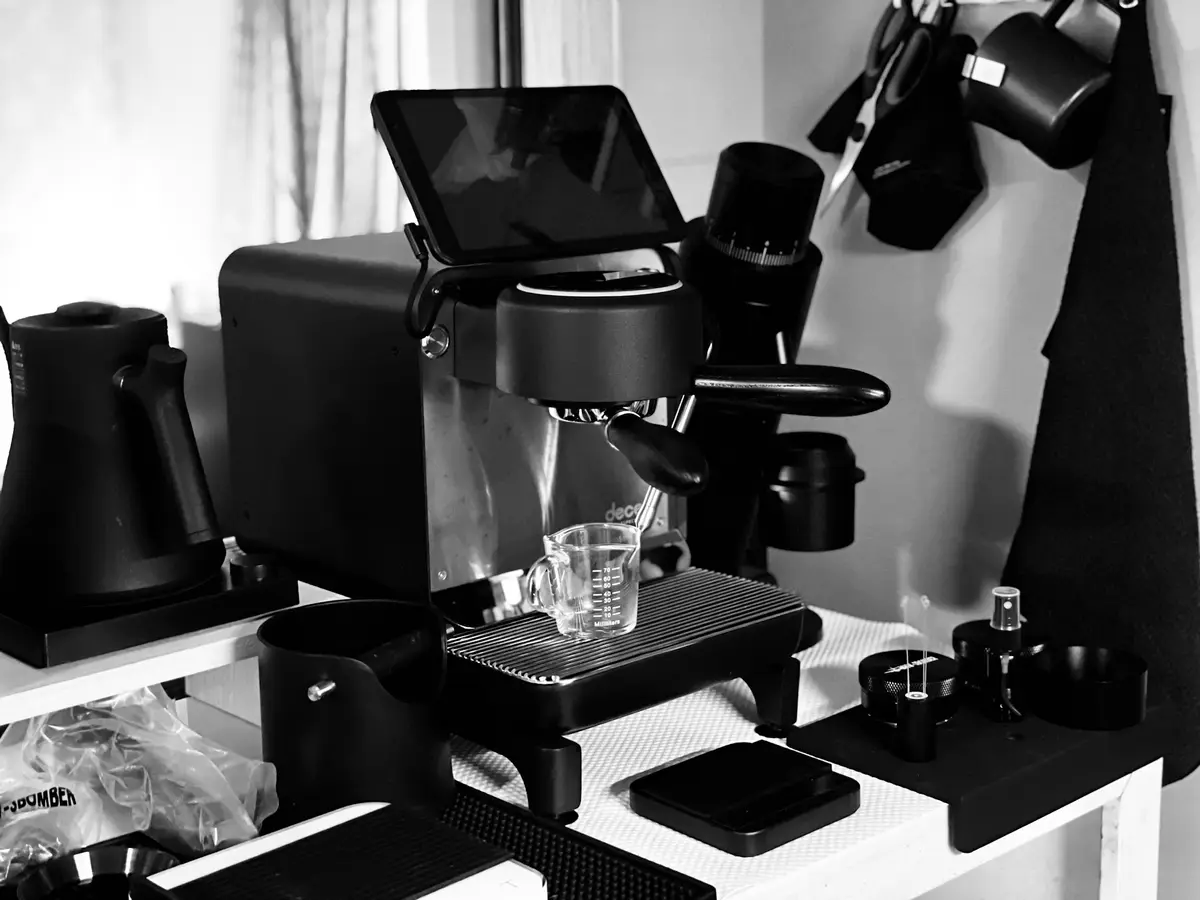
The tools that help: The Best Espresso AccessoriesRead the guide