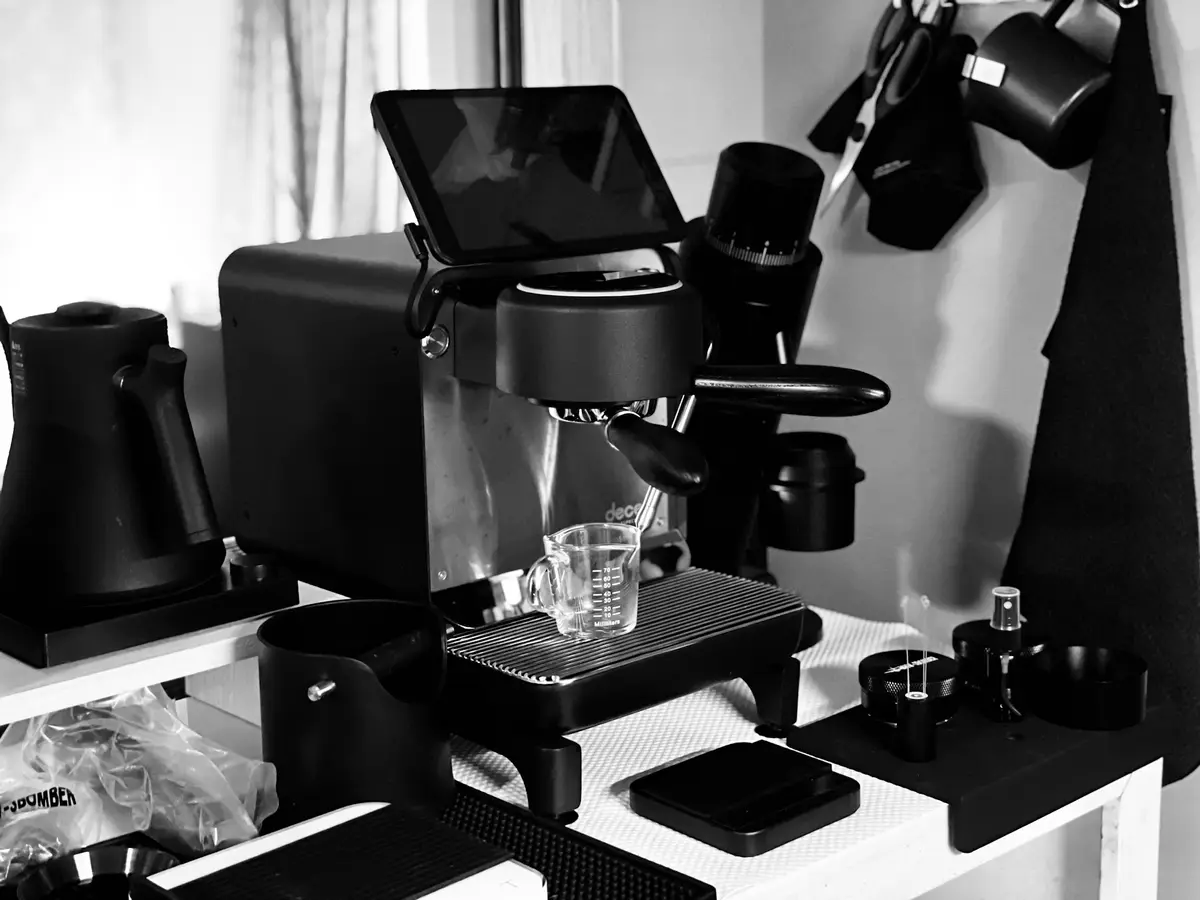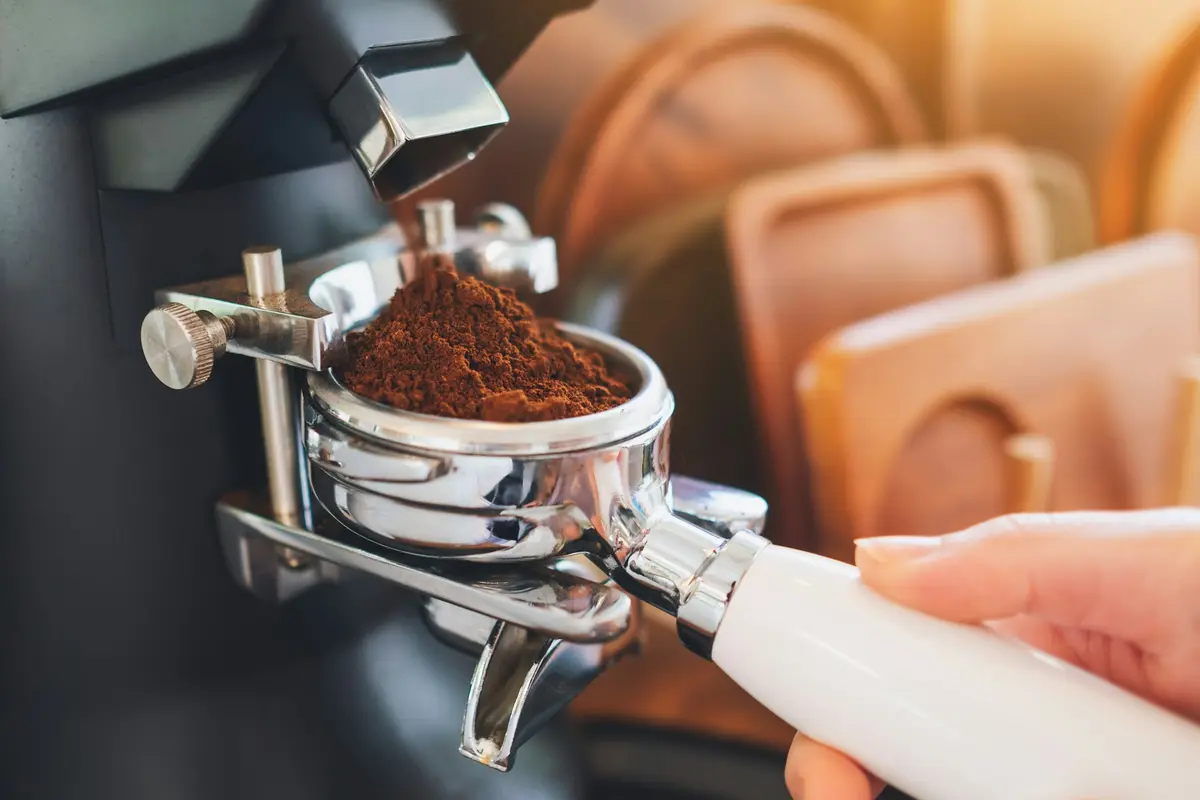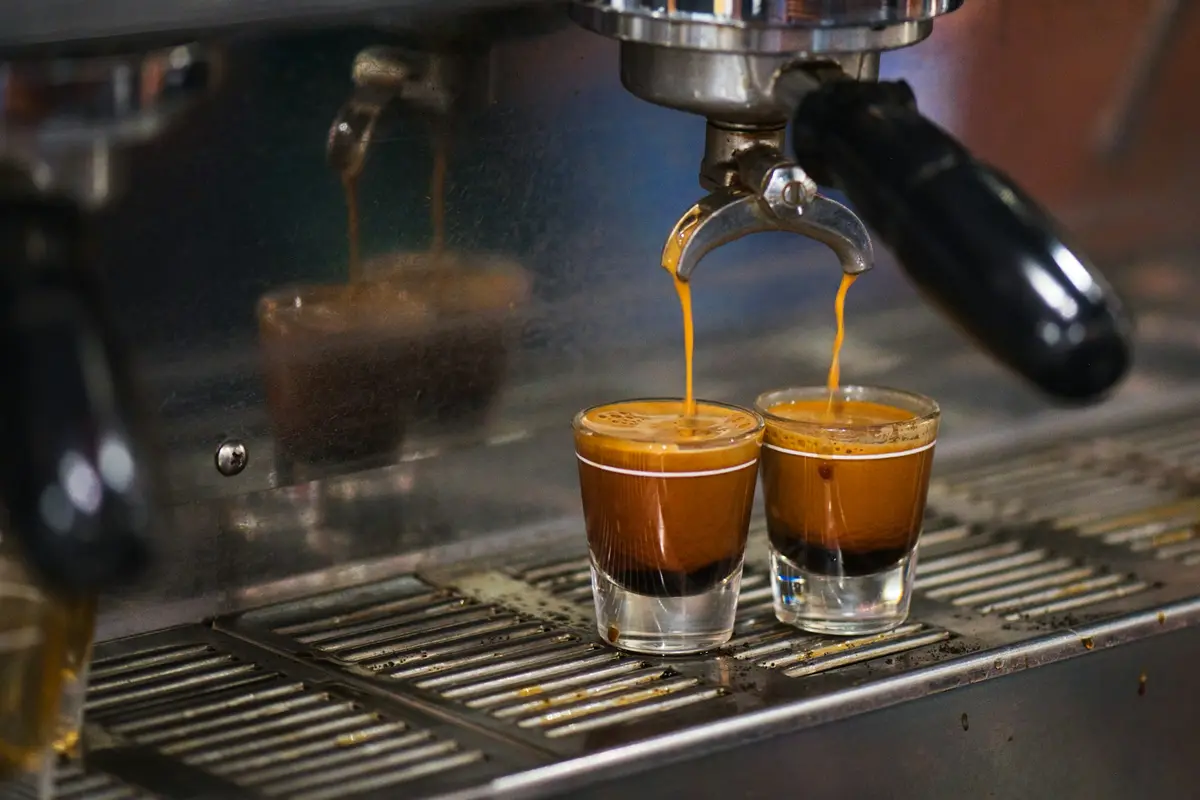
All three use the same amount of coffee. The difference is how much water passes through it, which changes the strength, the size and the flavour.
| Shot | Coffee to liquid ratio | Typical size | Taste |
|---|---|---|---|
| Ristretto | About 1:1 to 1:1.5 | 15–25 ml | Syrupy, sweet, intense, less bitter |
| Espresso | About 1:2 | 25–40 ml | Balanced sweetness, acidity and body |
| Lungo | About 1:3 or more | 50–110 ml | Lighter body, more bitter notes |
How to pull each one
- Ristretto: stop the shot early, at about one and a half times the dose in weight.
- Espresso: aim for about twice the dose in about 25–30 seconds.
- Lungo: let the shot run longer, to about three times the dose. A slightly coarser grind can stop it turning harsh.
Lungo or Americano?
A lungo pushes extra water through the coffee, extracting more of its bitter compounds. An Americano adds hot water to a normal espresso afterwards, which most people find smoother.
Make it instead:How to make an Americano
Choosing a machine? The Best Espresso Machines for BeginnersRead the guide